
I used to think gardening meant buying a cute little set of tools, planting a few things, and somehow becoming the person who always had perfect tomatoes.
That fantasy lasted about one afternoon.
Then the weeds showed up.
Then the soil needed turning. A branch needed pruning. Something needed transplanting. And suddenly I was standing in the garden wondering why I owned three tiny tools that couldn't actually do the job I needed.
Over time, I've learned that good gardening isn't about owning the most tools. It's about having the essential garden tools that match the work you actually do.

What Garden Tools Do I Really Need?
For most home gardeners, the tools you need for gardening can be surprisingly simple.
You don't need a garage full of equipment to maintain a backyard garden. You need a few reliable tools that cover the basic gardening tasks: digging, planting, loosening soil, weeding, pruning, moving debris, and watering.
Understanding garden tools and their uses is what helps you avoid buying the wrong equipment.
10 Essential Garden Tools for a Home Garden
1. Garden Trowel
If I could only keep one small hand tool, I'd probably keep my trowel.
I use it for planting seedlings, bulbs, herbs, and flowers, digging small holes, and working around established plants without disturbing a huge area of soil.
For container gardening, it becomes even more useful.

2. Hand Pruner
A good pair of hand pruners earns its place very quickly.
They're useful for removing dead stems, cutting back certain plants, harvesting herbs, and handling small branches. For larger branches, you need a different tool rather than forcing a hand pruner to do a job it wasn't designed for.
University of Minnesota Extension identifies pruning shears as one of the most important pruning tools for typical home applications, with larger branches requiring loppers or a pruning saw.
3. Garden Spade
A spade is one of those basic garden tools that doesn't look exciting until you actually need it.
I use one for digging planting holes, dividing plants, cutting through soil, and moving small amounts of soil.
If you're building a new garden bed, this is one tool you'll appreciate very quickly.
4. Garden Fork
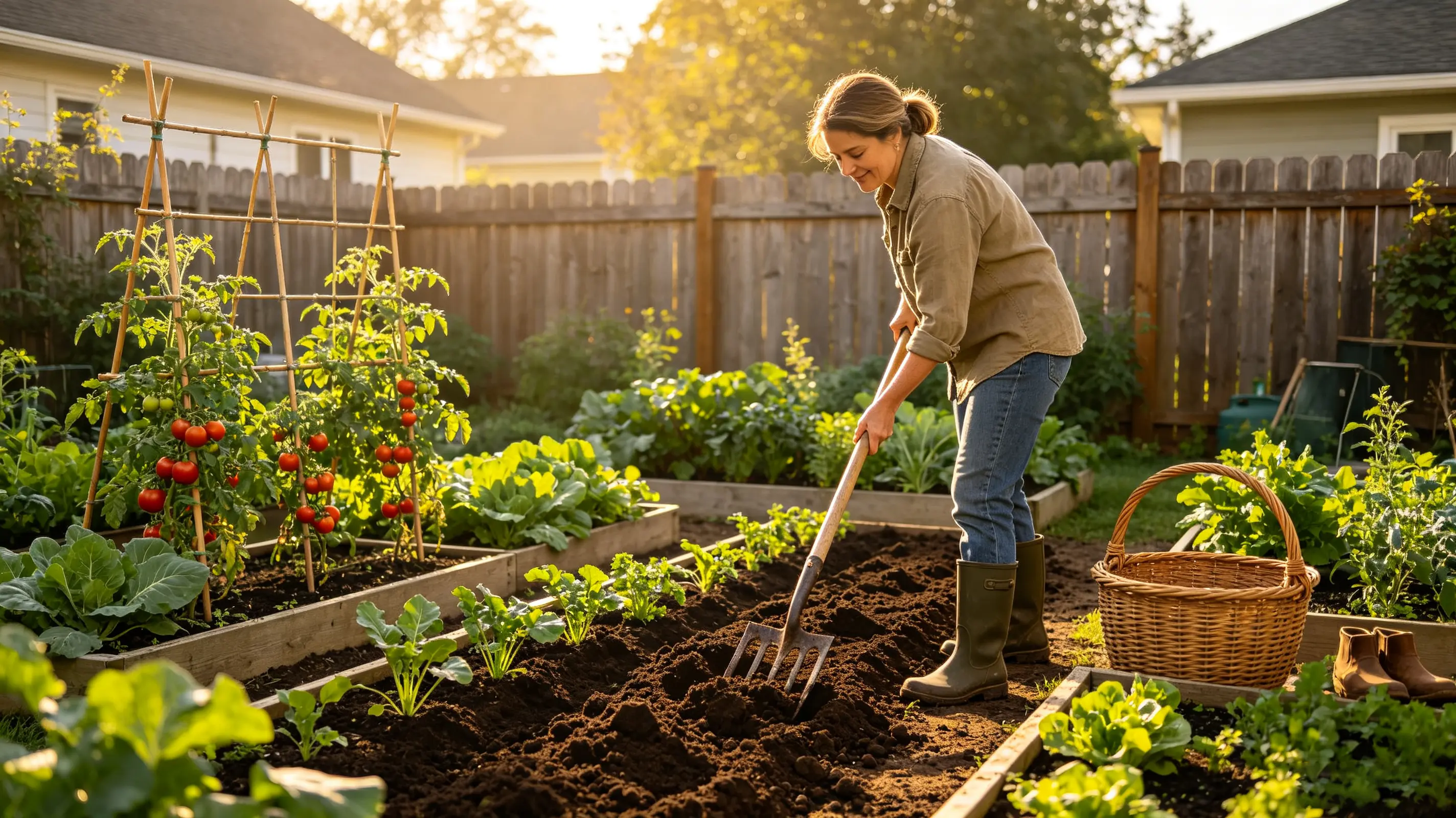
A garden fork is particularly useful when soil is compacted or you need to loosen material without simply pulverizing everything.
I like it for working around established beds and lifting roots or clumps of plants.
For larger soil-compaction problems, garden forks and broadforks can be useful alternatives to repeated tilling. Extension guidance notes that reducing unnecessary tillage can help protect soil structure.
5. Garden Rake
A rake has a much longer job description than "collect leaves."
I use one to smooth soil, clear plant debris, spread certain materials, and prepare a planting area.
A rake is especially useful when you're trying to create a reasonably even seedbed. For smaller gardens, you can do much of this work manually instead of bringing in larger equipment.
6. Garden Hoe
A hoe becomes incredibly useful once weeds appear.
And they will appear.
A hoe allows you to disturb small weeds while they're still young instead of waiting until you've created a jungle.
University of Minnesota Extension notes that different hoes suit different garden situations and recommends shallow cultivation so you don't damage plant roots.
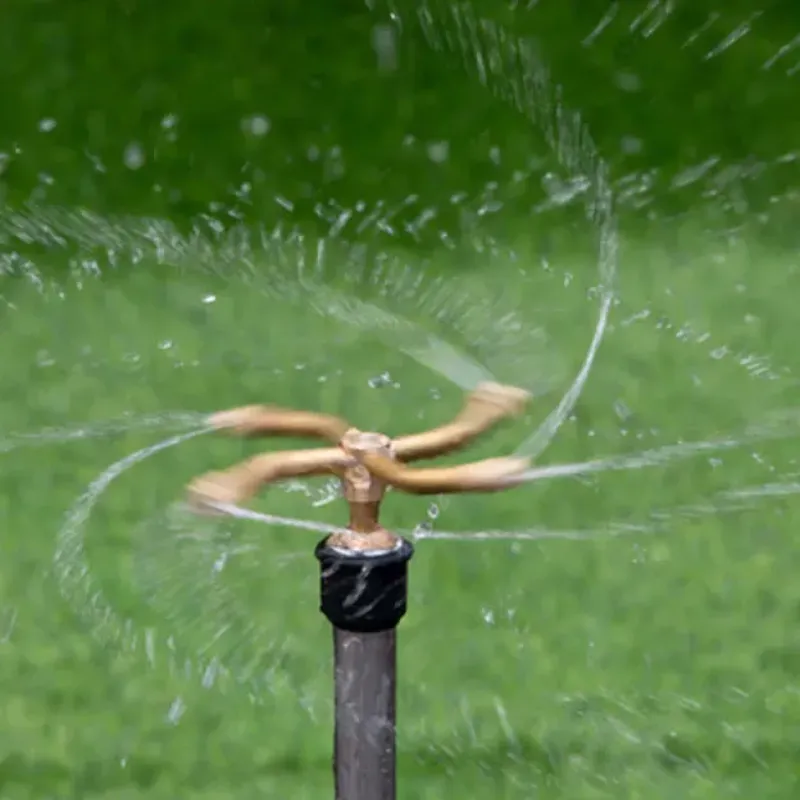
7. Garden Hose and Adjustable Nozzle
Watering is one of those jobs where convenience matters.
A hose with an adjustable nozzle gives me more control than simply blasting everything with full pressure.
Seedlings, established shrubs, containers, and delicate leaves don't necessarily need the same water delivery. I want enough control to adjust the flow rather than treating every plant like it's being pressure-washed.
8. Garden Gloves
Gloves are easy to underestimate until you're pulling weeds for an hour.
I look for gloves that let me actually grip a trowel or pruner without feeling like I'm wearing boxing gloves.
The best pair is the one I don't mind putting on every time I go outside.
9. Hand Cultivator
This small three-pronged tool is useful for loosening the top layer of soil, breaking up small clumps, and working around plants where a larger tool would be awkward.
It's particularly handy in containers and raised beds.
10. Garden Kneeler or Pad
This isn't technically a gardening tool in the traditional sense, but my knees strongly disagree with anyone who says it isn't useful.
If you spend a lot of time planting, weeding, or working close to the ground, a kneeling pad can make the experience much more comfortable.
Gardening involves repetitive bending, kneeling, reaching, digging, and pulling, so ergonomics aren't just about comfort—they can help reduce strain.
How to Choose Garden Tools as a Beginner
Buying gardening tools as a beginner can be surprisingly overwhelming because every tool aisle seems to contain five versions of the same thing.
I don't recommend starting with a giant set.
Start with the work.
Choose Tools Based on Your Garden Size
A gardener with six patio containers doesn't need the same equipment as someone maintaining a 1,000-square-foot vegetable garden.
| Your Garden | Start With |
|---|---|
| Containers | Trowel, cultivator, pruner, gloves, hose |
| Small flower bed | Add spade, rake, hoe |
| Vegetable garden | Add garden fork and stronger watering setup |
| Large backyard garden | Consider larger rakes, loppers, carts, specialized tools |
The garden should determine the tool collection—not the other way around.
Think About the Tasks You Do Most
Before buying another tool, I ask myself:
What am I actually doing in the garden?
If I'm constantly planting, I prioritize digging tools.
If I'm maintaining shrubs, pruners matter more.
If weeds are my daily battle, a good hoe may be more useful than another fancy planting gadget.
That's a much better way to build your collection than buying whatever happens to look impressive on the shelf.
Look for Comfortable Handles
This is one detail I wouldn't skip.
A tool can be technically excellent and still be miserable to use if the handle doesn't fit your hand or the shaft is the wrong length.
Extension guidance recommends choosing tools that fit your body and task, with appropriately sized handles and enough length on long-handled tools to help you work without excessive bending.
If possible, hold the tool before buying it.
Your hands will tell you more than the packaging.
Choose Durable Materials
A cheap tool that bends, rusts, or becomes uncomfortable after a few uses isn't really cheap.
For tools that go into soil regularly, I pay attention to the quality of the working head, handle construction, joints, and overall balance.
I also don't leave tools sitting outside.
Cleaning soil and plant debris after gardening and storing tools somewhere dry can help extend their useful life. Cleaning is particularly important when moving between plants because dirty tools can spread plant pathogens.
Don't Buy Every Specialty Tool at Once
This is probably my favorite beginner gardening rule.
You do not need a strawberry-hulling-looking contraption for every possible gardening problem.
Buy the basics first.
After a season, you'll know exactly what annoys you.
Maybe you constantly prune branches and need better loppers. Maybe your clay soil makes a garden fork essential. Maybe your small raised bed makes a full-size shovel unnecessarily awkward.
Your actual garden will tell you what to buy next.
Do Beginners Need a Full Garden Tool Set?
Not necessarily.
A full set can be convenient, but it can also give you several tools you'll rarely touch.
I'd rather have five well-made tools that I use every week than fifteen tools taking up space in the garage.
For a beginner, my starting group would be:
Trowel + pruner + spade + rake + hoe + gloves
Then add tools based on your garden.
That's enough to get most people through a surprising amount of everyday garden maintenance.
What Garden Tools Do I Need for Garden Maintenance?
Once the garden is established, the tool list becomes less about planting and more about maintenance.
You'll probably spend more time weeding, pruning, watering, clearing debris, checking plants, and dealing with seasonal changes.
That's why I think of garden tools as part of a larger system:
Garden → Gardening Tasks → Garden Tools → Tool Selection → Garden Maintenance
The tools are not the starting point.
The garden is.
At Honmoons, this is the kind of practical connection worth keeping in mind: choose equipment based on what your garden actually asks you to do, rather than assuming every gardener needs the same toolbox.

FAQ
What are the most essential garden tools?
For most home gardeners, the essential gardening tools include a trowel, hand pruner, spade, garden fork, rake, hoe, hose, gloves, hand cultivator, and a kneeling pad or garden kneeler.
Do I need expensive gardening tools?
Not necessarily. Durability, comfort, balance, and suitability for the task are usually more important than simply choosing the most expensive option.
How should I maintain my garden tools?
Remove soil and plant debris after use, dry tools before storing them, keep cutting tools sharp, and clean or disinfect tools when moving between plants—especially when disease is suspected.
The Best Garden Tool Is the One You'll Actually Use
After enough time gardening, I've stopped being impressed by a shed full of tools.
What impresses me now is reaching for the same well-balanced trowel I've had for years, knowing exactly where it is, and knowing it will do the job.
That's really the point of building a garden toolbox.
You don't need every tool.
You need the right tools for your garden, your hands, and the work you actually do.